Good Show in a Bottle
I'd save every day 'til eternity passes away

Laydeeez annnnnd Gentle Men:
As you well know by now, I love the theater. I express this love by attending whenever I can afford tickets, and saying yes to all people who have extra tickets. If I haven’t seen a show in a week, it feels odd and I end up watching movies based on shows or reading books that have been or are about to be turned into shows (or films).
I love the crossover of narrative - the many ways that a story can be told.
I do not read reviews before I see a show.
“But how do you know if a show is going to be good?” I am frequently asked.
I do not. It is irrelevant to me whether a show is going to be good. I don’t go to the show because it is good as I would if I was choosing a restaurant. I go like a sporting event: whether or not your team loses or wins is irrelevant, the point is the game itself.
So with theater.
Part of my joy in experiencing theater is that I get to choose, for myself, whether I think a show is good or not, and why. Discussing the “why” of a show working or failing to be cohesive is, for me, the greatest joy in seeing a show.
What is a good show?
For most people, it is a show that is worthy of watching - in other words, they value that three hours (give or take 90 minutes) of their own time so highly that the combination of the ticket price and the spectacle or message have to be equivalent to doing something else with that three hours.
But what else would you be doing? Eating dinner? Watching Netflix? Doomscrolling your phone? Working to earn more money?
All shows make me think: therefore theater is good.
(Overall. I think a “great” show is one in which all the aspects work together in harmony so unified that no one part overshadows the rest. I love to see all the parts and to analyze how well they work together to tell a story, give an experience, or relate a message, depending on the apparent intention of the production. Therefore a campy show that is intending to give you a good time might be “great” and a beautifully insightful two-person play in which you leave with a new understanding of the function of empty space in both the universe and relationships might be equally “great.”)
In any event, this week, I saw two brand-new plays: one sought backers at 440 Studios and one is in front of audiences at the Public:


The producer’s reading was for a new musical called PARADISE LOST IN SPACE (which really should be called “Paradise Lost in Space… Jelly,” and I’m going to be making that case to the writer)… It was glittery and bombastic and the music was moving and filled with tight harmonies and the talent of the singers was over the top - the show is campy and funny and obscene and the message is novel and strong. I recommend it to anyone who loves a solid drag show that pushes boundaries.
I also saw ANTIGONE (A PLAY I SAW IN HIGH SCHOOL) which is at the Public (coincidentally across the street from the venue where I saw the reading) - and in that play, a powerful, interesting, multilayered script with magnificent acting was derailed by the production choice of using copious amounts of stage blood on white costumes as a main focus to further heighten the already stratospheric drama of the show.
It was a case where the reality of the theater bumped up against the narrative and stage magic of the theater and, like a cue ball hitting a stripe before the intended solid, once my attention was pulled, the distraction was hard to navigate.
On a bare-bones stage, the actors avoided (or failed to avoid) shiny puddles of blood leftover from previous bloody scenes, and at one key moment, the lead actress takes off her socks and the audience sees that her feet are orange. They aren’t intentionally orange. They were dyed orange from having walked through past performances, where there is blood on the stage.
For unknown reasons, the huge Jar-Jar Binks tattoo on her bare shoulder is much easier to ignore.
You find yourself thinking about stage blood, how sticky it is, how impossible to wash off, you wonder what the scene would look like without blood, is the blood necessary? Perhaps less blood would lead to less puddling… and then you’re trying to follow the most tender and vulnerable monologue while at the same time wondering how much more blood you’ll be invited to witness — and later in the show there is a double-monologue with this character and her contemporary self (who does not show off either her feet or a Jar Jar tattoo at any point) yet there too, the stage blood upstages their climactic exchange of words. The contemporary Antigone is wearing a pristine white suit and comes so near the blood drips that you are certainly, at least in passing, wondering if she is intending to bloody-up the suit or if the costume designer or stage manager has begged she keep it clean and how does this change the actress’ commitment to her scene partner if she is worried about getting her white suit messy. How does it change my response to the crucial dialogue in the scene that I am worried about her getting the white suit messy?
Stage blood: just one of the ways in which a message can be lost because of theatrics overshadowing simple communication.
This problem is everywhere. The 24-hour news cycle having to be “relevant” at all times day and night creates emergencies out of stories that broke weeks ago. The weather is always a crisis. Entertainment (short stories, theater, shows on screens) is required to grab us in the opening moments and not let go.
Is it any wonder that consumers of story are exhausted? When everything is important, nothing is. People retreat to safety in their few hours of solitude and instead of watching a play that may or may not be “good” and almost certainly won’t be “great” - they go rewatch their favorite episode of some show they enjoyed in their teens. Once, in a short story I wrote in college, I imagined a channel devoted only to peaceful imagery and music called “the Relaxation Station” and back then it seemed preposterously odd that anyone would tune in to tune out.
Here we are. Tuning out.
But me, I like to think about things. If not about the message the show is sending, at least about the bottle that included a message.
Writing News:
Novel update - I spent this week working on back matter and front matter and reworking my bio. It is surprisingly difficult to condense all my years of living into three sentences. One of the Pen Parentis Fellows wrote a creative piece once…let me see if I can post it for you…here it is. So clever. Jess deCourcy Hinds wrote a whole short story using only “contributor notes.”
Once more this is the friends link to my recent article in Counter Arts comparing the two shows BloodLove and Bigfoot.
Also my take on AI for writers is here on this friends link, published by Long, Sweet Valuable.
Random Final Thought
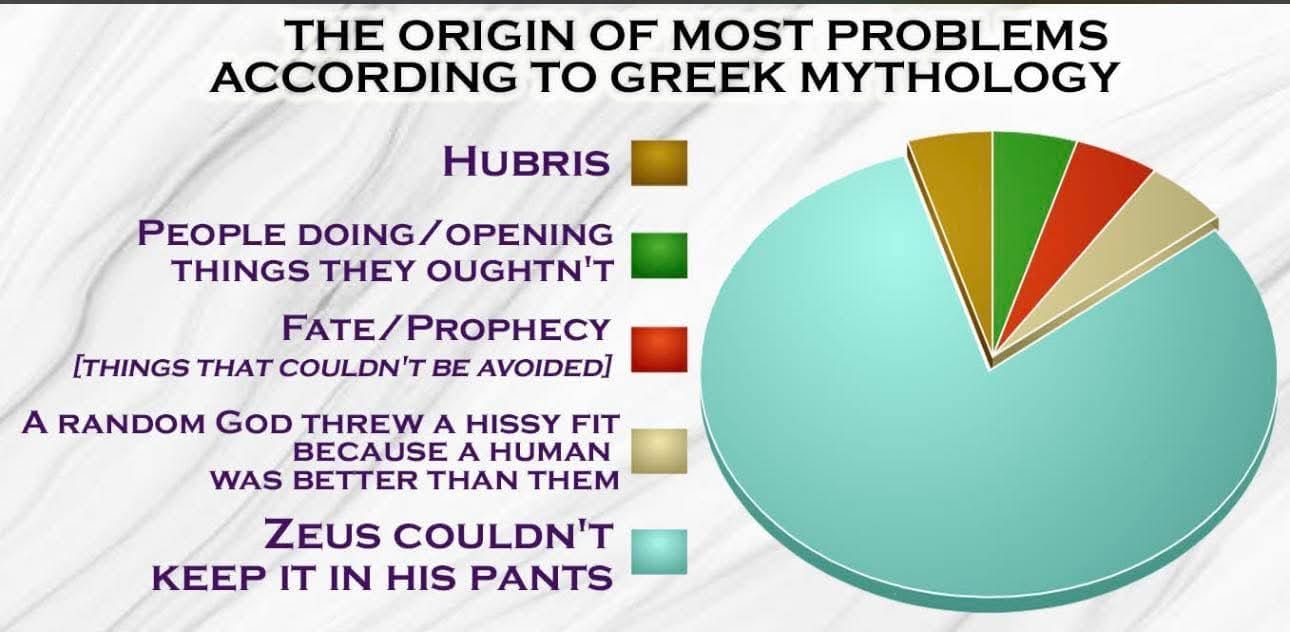
A friend sent me this and it made me chuckle. I don’t normally send on memes but this one is pretty clever: